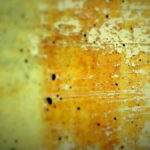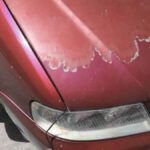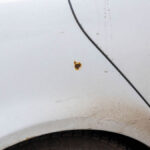
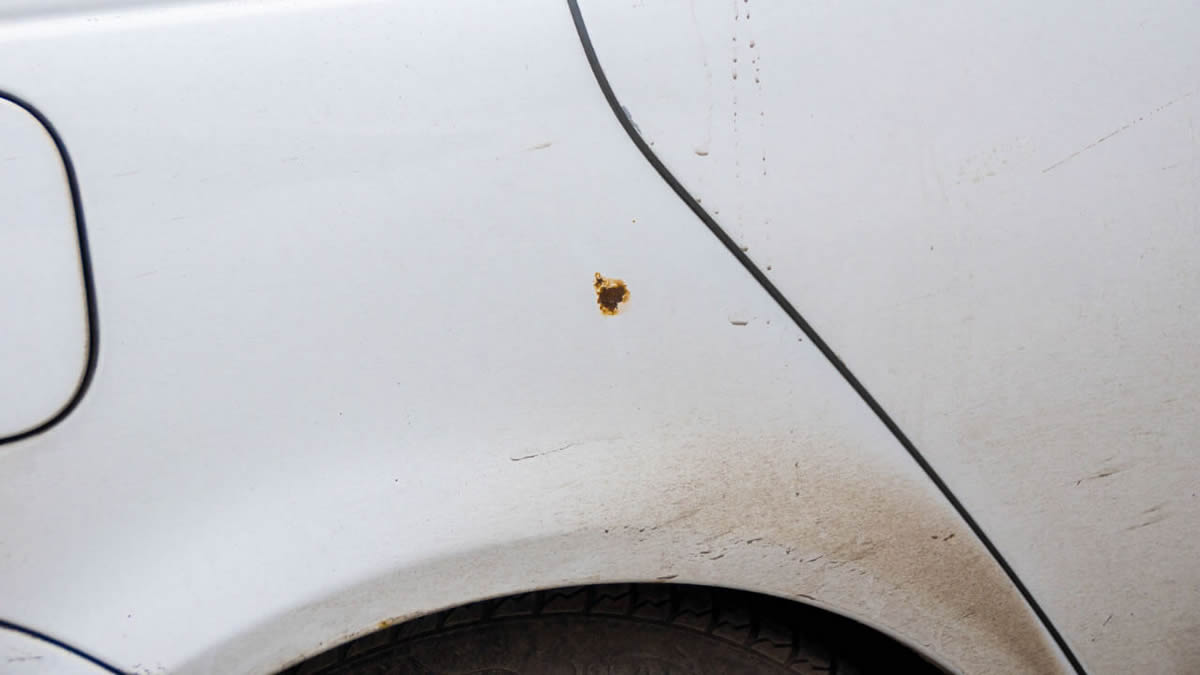
Rust spots on car paint are a common problem, especially in areas with high humidity or near the ocean. Rust develops when iron or steel is exposed to oxygen and moisture, typically through a small chip in the paint.
Once the rust starts, it can quickly spread beneath the paint, causing extensive damage to your paintwork unless the underlying problem is fixed.
To prevent the spread of rust spots, it is essential to regularly check your car for any chips or scratches in the paint. If you do find a chip, sealing it as soon as possible is critical to prevent moisture from getting underneath the paint.
This article will extensively discuss five effective and safe ways of removing rust spots from your vehicle paintwork and explain ways to help prevent rust spots from developing on your car.
5 Effective Ways To Remove Rust From Car Paint
Rust spots on a car can be unsightly and make your vehicle look older than it is. Fortunately, there are ways to address these spots safely without causing permanent damage to your clear coat or factory finish.
Washing and waxing your car regularly remains the best way to prevent rust spots. This routine creates a protective barrier against moisture and oxygen. However, if you do find rust spots on your vehicle, there are a number of specific techniques and products available that can help you resolve them safely.
This guide outlines five proven methods that are safe and effective in removing or treating rust spots on your car’s paint.
1: Rust Dissolver Spray Gel
Automotive-specific rust dissolver spray gels are highly effective products for stripping rust down to bare metal. Formulated with a gel-based phosphoric acid, these products are engineered to spray on smoothly and cling tightly to vertical surfaces like doors and fenders without running or dripping onto other parts of the vehicle.
Unlike heavy-duty industrial liquid soaks or multi-purpose penetrants (like standard WD-40 or tool baths, which can permanently ruin your clear coat), automotive spray gels are safe for spot treatments on paint finishes as long as they are applied precisely, monitored closely, and not allowed to dry on the surface.
Quality options are readily available on the market today, with Rust-Oleum Rust Dissolver Spray Gel being one of the most trusted choices for targeted automotive work.


How to Use:
- Wash the affected area thoroughly with car soap to remove grease and road grime, then dry completely.
- Use a fiberglass sanding pen or fine sandpaper to gently scrape away loose rust flakes and bubbling paint, then mask off the surrounding healthy paint with automotive masking tape.
- Put on rubber gloves and eye protection, shake the bottle well, and spray the gel directly onto the exposed rust spot. For very small chips, spray the gel into a plastic cup and apply it precisely using a small artist’s brush.
- Let the gel sit on the area for 10 to 30 minutes depending on the severity of the rust. Watch it closely to ensure it stays wet; if it begins to dry out, mist a tiny bit more fresh gel over the spot.
- Wipe away the dissolved rust sludge with a clean cloth or paper towel, then immediately rinse the area thoroughly with fresh, clean water to completely neutralize the acid.
- Dry the area thoroughly. Because the metal is now completely bare and unprotected, immediately apply an automotive primer followed by your factory touch-up paint to prevent fresh rust from forming.
Related: How To Protect Car Paint Without Clear Coat
2. Scratch and Swirls Remover
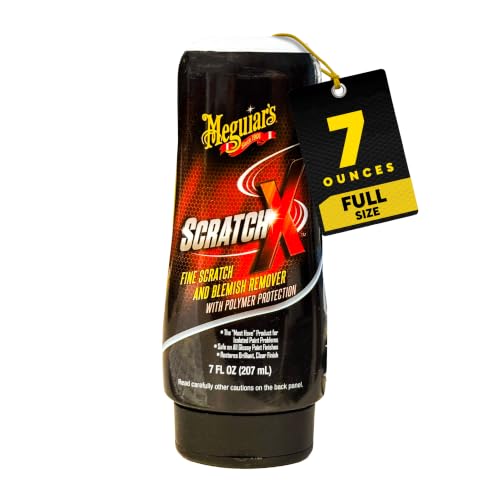
Scratch and swirl removers such as Meguiar’s ScratchX effectively remove newly formed, light rust stains. However, they are not designed for deep structural rust that has penetrated completely through the paint layer and into the metal panels.
Meguiar’s ScratchX cuts through light surface oxidation and rust staining, gently polishing the top layer of the clear coat where the rust stains have pooled, smoothing the surface for a clean, restored look.
NOTE: This process is quick and simple for small rust spots, but it’s not ideal for deeper or larger rust spots, since scratch removers only remove the bleeding rust stains pooling on top of the clear coat, they cannot fix actual metal corrosion
How to Use:
- Wash the affected area thoroughly with car soap and water to remove dirt and debris around the rust spot, and dry the surface completely with a clean microfiber towel.
- Put a small amount of Meguiar’s ScratchX on a microfiber or foam applicator pad. Gently apply the product to the rust spot using a circular motion.
- Buff the area until the rust stain or surface oxidation starts to fade. Repeat the process, applying a bit more ScratchX and buffing in a circular motion until all the spots are completely eliminated.
- Use a clean microfiber towel to wipe off any remaining product, revealing the polished surface underneath.
3. Iron Remover
Iron removers are designed to effectively dissolve and remove metallic iron particles (like brake dust or industrial fallout) that have bonded to your car’s paint. If left untreated, these particles oxidize and turn into orange surface rust spots.
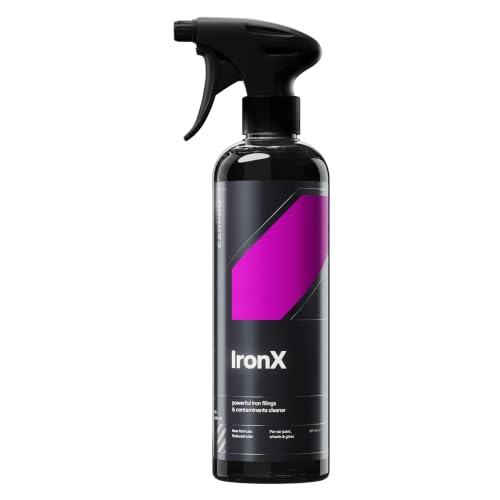
Iron removers, such as CARPRO IronX, work by chemically reacting with these iron particles, breaking them down so they can be safely rinsed away from the surface, stopping deeper rust formation before it starts.
NOTE: When the product reacts with iron, it turns a bright purple color, visually showing you exactly where the contamination exists. This method is highly effective for rust spots caused by surface iron contamination and protects the health of your clear coat.
How to Use:
- Clean the vehicle’s surface with a dedicated car wash soap such as Mr. Pink Car Wash Soap and water to remove loose dirt and grime. Dry the area or the entire vehicle thoroughly.
- Spray the IronX iron remover directly onto the affected rust spot areas. Allow the product to sit for 3 to 5 minutes. It will turn purple as it reacts with the iron particles.
- For more stubborn spots, gently agitate the area with a soft detailing brush or microfiber sponge to help break down the particles further. Do not let the product dry on the paint.
- Rinse the entire area thoroughly with a strong stream of water to wash off the dissolved iron and the product residue.
- Check if the rust spots have been fully removed. If needed, reapply and repeat the process.
- Finally, apply a wax or paint sealant to protect the freshly cleaned surface from future iron buildup.
Related: How to Remove Rubber and Scuff Marks from Car Paint
4. Automotive Clay Bar (Detailing Clay)
An automotive clay bar is an effective, non-chemical way to remove bonded rust spots from car paint. A clay bar isn’t highly abrasive like sandpaper; it works gently and smoothly through shearing and adhesion..
During the claying process, as you glide the lubricated clay across your car’s paint, it rides smoothly over the flat clear coat. When the clay hits a raised contaminant, like a sharp, microscopic particle of rust or brake dust, it physically grabs the particle and shears it off at the base. The particle is then pulled away from the car and embedded deep inside the clay’s sticky structure, keeping it from scratching the paint.
For effective results, the Mothers California Gold 3 Clay Bar Kit is highly recommended. The kit includes the necessary clay bars, a dedicated detailing spray (Mothers Instant Detailer) to act as a lubricant, and a microfiber towel.

How to Use:
- Thoroughly clean the area around the rust spots with car soap and water. Dry the surface completely with a microfiber cloth to ensure no loose dirt or debris is left.
- Prep the clay bar by kneading it in your hands until it becomes warm and pliable, then flatten it into a small pancake shape roughly the size of 3 or 4 fingers.
- Generously spray and lubricate the working area with the detailing lubricant. The surface must stay wet and slick.
- Slide and glide the clay back and forth in straight lines using light pressure until the paint feels smooth.
- Dry the area with a clean microfiber towel and check that the surface feels smooth like glass and that the rust spots are gone.
- Fold the clay bar over to expose a fresh, clean face, and repeat the process before moving to the next section.
- Finally, apply a fresh coat of wax or paint sealant to protect the freshly exposed clear coat.
⚠️ The Golden Rule of Claying: If you drop the clay bar on the ground, throw it away immediately. It will instantly pick up tiny rocks and dirt from the ground that cannot be washed off, turning the clay bar into sandpaper that will ruin your car’s paint.
5. Corrosion and Rust Inhibitors
Unlike a clay bar, which physically removes rust particles, a Corrosion and Rust Inhibitor like Permatex 81773 Rust Treatment does not physically remove rust from your car’s paint. Instead, it chemically converts existing rust into a stable protective layer.
Permatex Rust Treatment is a milky-white liquid polymer coating. When applied directly to a rusted spot, the product reacts with Iron Oxide (Rust).
Within 15 to 30 minutes, it chemically converts the porous rust into a tough, black polymer coating. This process serves two purposes: it stops corrosion in its tracks by cutting off oxygen and moisture, and it also acts as a durable primer coating ready for paint.
NOTE: This product turns the treated rust completely black. It is not recommended for highly visible, exterior body panels unless you plan to immediately cover it with matching automotive touch-up paint.

How to Use:
- Wash the area with the rust spot, scrape away loose or flaking rust, and mask off the surrounding healthy paint with automotive tape.
- Pour a small amount of the treatment into a separate disposable cup to avoid contaminating the main bottle.
- Use a fine artist’s brush or a precision swab to apply a thin layer strictly onto the rusted spot, wiping off any accidental spills on healthy paint immediately.
- Wait 15–30 minutes for the spot to start turning black, then apply a second thin layer.
- Let it dry and cure completely for a full 24 hours. Keep the area completely dry during this window.
- Once fully cured, wipe the area down with a dry microfiber cloth to remove any surface film.
- Finally, apply your automotive touch-up paint over the black treated area to seal the repair and restore your car’s look.
Related: Effective Methods to Restore Dull Spots on Car Paint
Causes Of Rust Spots On Car Paint
There are several causes of rust spots, but the most common is exposure to moisture. When metal is exposed to moisture, it oxidizes, forming a red-brown substance known as iron oxide or rust. Other reasons why rust in your car paint include exposure to the elements, damage from road debris, and even poor washing technique.
Let’s look into these causes in detail.
1. Road Salt
Exposing your car to excessive salt predisposes it to rust. If the salt brine applied to clear off snow during winter gets stuck on your vehicle’s underbody, it will speed up rust formation if not cleaned. Besides, living close to the ocean makes your vehicle more vulnerable to rust.
2. Poor Maintenance
Failing to take good care of your car makes it more vulnerable to rust and other paint imperfections. Regular car maintenance allows you or your mechanic to spot rust in its first stages and clear it off before it spreads to other parts and becomes worse.
3. Weather Elements
When you leave your car unprotected, rain, humidity, snow, and other elements of nature will ruin it. Although vehicles are built to stand up to tough conditions, excessive exposure to these elements speeds up rust formation. Over time, rust will spread to every part if no measures are taken to curb it.
4. Pollutants
Pollutants also cause rust spots on car paint. Overexposing your car to moisture and environmental pollutants causes oxidation, leading to rust formation. Parking your vehicle in an area with high air and environmental pollution also causes rust spots on the paint.
Related: How to Remove Mud Stains from Car Paint
Prevention Tips for Rust Spots on Car Paint
Rust is one of the most common problems that affect car paint. Rust can cause the paint to deteriorate, and it can also make the car look unsightly.
There are a few simple things that you can do to help prevent rust spots from forming on your car’s paint.
- First, make sure to wash your car regularly. This will remove any dirt or debris that could potentially cause rust.
- Secondly, try to park your car in a garage or under a carport whenever possible. This will protect the paint from the elements and increase its lifespan.
- Finally, consider applying a clear coat of sealant to the paint. This will provide an extra layer of protection against rust and keep your car looking shiny and new for longer.
By following these simple tips, you can help keep your car’s paint looking like new for years to come.
Related: Effective Methods to Restore Dull Spots on Car Paint
Conclusion
Rust spots are not only unsightly, but they can also damage the paint on your car. In this article, we’ve shown you how to remove rust spots from car paint using five simple yet effective methods.
We have also discussed the main culprits of rust formation and finally looked at the prevention tips for rust spot formation on your vehicle paint.
We hope you found this information helpful and will help you keep your car looking its best. Have you tried either of these methods for removing rust? Let us know in the comments below!