
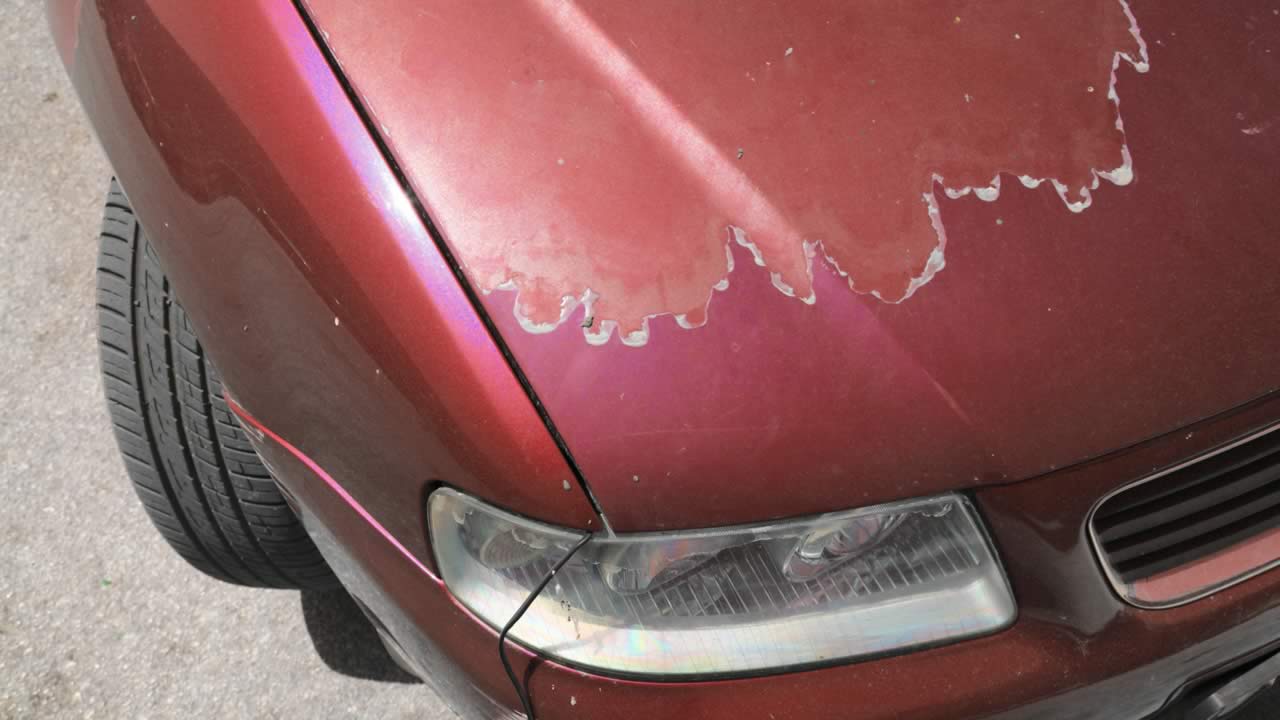
Over time, your car’s paint can start to look dull, chalky, or faded; that’s oxidation at work. It happens when the clear coat breaks down from exposure to sun, moisture, and pollution, causing the surface to lose its shine and smoothness.
If left untreated, oxidation doesn’t just ruin your car’s appearance; it can also eat deeper into the paint, making it harder and more expensive to fix. Washing alone won’t help, and using harsh products can make the damage worse by scratching or thinning the paint even more.
The good news is you can restore that glossy finish with the right tools and techniques. In this guide, we will show you, step by step, how to safely remove oxidation from your car’s paint, restore its deep, mirror-like shine, and protect it for the future.
5 Effective Methods to Remove Oxidation from Car Paint
With the right tools and techniques, you can restore your paint’s shine at home. In this section, we will cover 5 effective methods to remove oxidation from car paint, helping you bring back that smooth, glossy finish safely and easily.
1. Oxidation Remover
An oxidation remover like Meguiar’s M49 Heavy Duty Oxidation Remover works by combining mild abrasives and chemical cleaners to remove the thin, oxidized paint layer caused by sun and air.
The abrasives gently scrub away the dull, chalky surface, while the cleaning agents break down oxidation and stains, revealing the fresh, healthy paint underneath.
As you rub or machine-polish it into the surface, it smooths the paint, restores color and shine, and makes the car look newer again.
No products found.
Steps to follow
- Wash and dry the car to remove dirt and prevent scratches.
- Apply Meguiar’s Oxidation Remover using a foam pad or microfiber cloth. Work in small sections and rub in circular or back-and-forth motions.
- After completion, wipe clean with a dry microfiber towel to remove any remaining residue.
- Repeat if needed, especially for heavily oxidized areas.
- Finish with wax or sealant to protect the restored paint and add shine.
2. Polishing Compound
Rolishing Compound operates on the principles of abrasion and leveling. It contains tiny abrasive particles that remove a thin layer of paint, eliminating scratches and imperfections and leaving a smooth, reflective finish that enhances your car’s appearance.
Chemical Guys Insynchro Supreme Extreme Compound is a great choice because it removes oxidation by using abrasive particles that physically sand away the thin, oxidized paint layer.
As you rub or machine-polish it onto the surface, it smooths out the chalky, dull areas and exposes the fresh, healthy paint underneath.
This process restores color and shine, levels minor imperfections, and prepares the paint for polishing or waxing to protect and enhance the finish.
No products found.
Steps to Follow:
- Wash and dry the car thoroughly to remove dirt and grime to avoid scratches.
- Apply a small amount of polishing compound to a foam or microfiber applicator pad, and rub in circular or back-and-forth motions with moderate pressure. For effective results, work in small sections.
- Repeat if needed, until the compound completely removes the oxidized layer.
- Wipe off any residue with a microfiber towel, then apply polish or wax to restore shine and protect the paint.
3. Rubbing Compound
Rubbing compound is an abrasive paste used to remove surface imperfections from car paint, such as light scratches, oxidation, swirl marks, and paint transfer. It works by leveling the clear coat, making it ideal for restoring dull finishes and preparing paint for polishing and waxing.
The main difference between a rubbing compound and a polishing compound lies in abrasive strength and purpose when removing oxidation.
Polishing compound contains finer abrasives for removing mild oxidation, whereas rubbing compound contains stronger abrasives that cut deeper into the paint to remove heavy oxidation, scratches, and severe dullness.
No products found.
We highly recommend Meguiar’s Ultimate Compound, which removes oxidation by combining micro-abrasives with mild cleaners to cut through the dull, oxidized paint layer gently.
You can apply it by hand using a Form Aplicator Pad or a polisher machine, such as the GEVEELIFE Buffer Polisher. It smooths out chalky, faded areas, restores color, and reveals the fresher paint underneath.
Unlike heavy-duty compounds, this Product is safe for clear coats and also helps reduce minor scratches and swirl marks, leaving the surface ready for polishing and waxing.
No products found.
Steps to Follow:
- Wash and dry your car thoroughly to remove dirt and debris.
- Apply the rubbing compound on a foam or microfiber applicator pad.
- Work in small sections, rubbing in circular motions to gently remove oxidation.
- Wipe off the remaining residue with a microfiber towel.
- Repeat if needed, especially for heavily oxidized areas.
- Finalize with polish and wax to restore shine and protect the paint.
4. Heavy Duty Rubbing Compound
A heavy rubbing compound like Turtle Wax T230A Rubbing Compound is especially effective on heavy oxidation. However, because it’s stronger abrasives that cut deeper into the paint, it should be applied carefully to avoid removing too much of the clear coat.
While the Turtle Wax T230A compound effectively removes severe oxidation and blemishes, it is less refined, may leave more residue or micro‑marring, and often requires a later polishing step to improve shine. It also requires more effort to wipe and clean.
No products found.
Steps to Follow:
- Wash and dry the car thoroughly.
- Apply a few drops of Turtle Wax T230A Rubbing Compound on an applicator pad of an orbital polisher.
- Set your orbital polisher to its lowest speed and spread the compound evenly over the section.
- Move the polisher in slow, overlapping passes—first side-to-side, then up-and-down.
- Apply moderate, even pressure while keeping the pad flat against the paint. Continue until the compound turns clear or dull gray, indicating that oxidation has been removed.
- Use a clean microfiber towel to wipe away excess residue before it dries.
- Repeat if needed for heavily oxidized areas.
- Finish with polish and wax to restore shine and protect the paint.
Related: How To Remove Rust Spots From Car Paint
5. Decontamination with an Iron Remover
An Iron Remover works chemically to remove oxidation on car paint by dissolving tiny iron particles (from brake dust, rail dust, and pollution) that get embedded in your car’s paint and contribute to oxidation and surface damage over time.
Iron remover liquid, such as Adam’s Iron Remover, reacts with these iron contaminants, breaking them down into a water-soluble form (often turning purple as it works), which you then rinse off, leaving the paint cleaner and smoother.
Removing these embedded particles prevents them from accelerating oxidation and prepares the surface for polishing, which can then restore the paint’s shine more effectively.
No products found.
Steps to Follow:
- Wash the car to remove loose dirt so you don’t scratch the paint
- Spray the Iron Remover on the oxidised paint evenly
- Wait 2–5 minutes for it to react and turn purple as it breaks down the oxidised iron.
- Rinse thoroughly with plenty of clean water to remove all residue.
- Finally, polish or wax to restore shine and protect the paint.
6. Clay Bar Treatment
Lastly, the Clay Bar Treatment is a detailing process that uses a synthetic resin compound to remove embedded contaminants, such as brake dust, tree sap, and road tar, from a car’s paint surfaces.
This method is primarily designed for car paint decontamination and the removal of mild oxidation. While it can help lift light, loose surface oxidation, it cannot fix the dull, chalky, or faded appearance caused by deep oxidation.
We always go with the Mothers California Gold 3 Clay Bar Complete Kit to remove embedded contaminants (like dirt, metal particles, and pollution) that sit on the surface and worsen oxidation.
As you glide the clay over lubricated paint, it grabs and lifts these particles, leaving the surface smooth and clean. This doesn’t fully remove the heavily oxidized layer, but it prepares the paint, allowing polishes or compounds to work more effectively and restore the shine.
No products found.
Steps to Follow:
- Wash and dry the car to remove loose dirt and dust.
- Spray lubricant (included in the kit) on the oxidised area and glide the clay bar gently, moving back and forth, with gentle pressure. Continue until the surface feels smooth and slick.
- Wipe with a microfiber towel to remove excess residue.
- Use an Oxidation remover, polishing, or rubbing compound for severely oxidised surfaces.
- Finish with polish and wax to restore shine and protect paint.
Related: How To Remove Dust From Fresh Car Paint
Main Causes of Oxidation on Car Paint
Car paint oxidation doesn’t happen overnight; it’s the result of constant exposure to harsh environmental elements. From sunlight to moisture and pollution, several factors slowly break down your car’s clear coat, leaving the paint looking dull and faded.
Understanding these causes is key to preventing long-term damage. Let’s explore the main causes of car paint oxidation so you can better protect your vehicle’s finish.
1. Harsh Car Cleaning Products
Coarse cleaning materials or harsh solutions can remove oils in paint. Abrasive cleaners remove the car’s clear coat. When the sun reaches the exposed areas, there is a risk of corrosion.
2. Environmental Pollution
Contaminants like carbon pollution from exhaust fumes affect the clear polish on the car paint. The carbon-based molecules that are invisible to the naked eye are coarse and jagged. They accumulate on the clear coat, exposing the paint.
3. Sunlight
Exposing your car to UV rays over time causes the paint to fade. Extreme sunlight can degrade the oils that give your car its shine.
The UV rays heat the paint, and when it mixes with the oxygen in the atmosphere, it triggers a chemical reaction. The result is oxidation that dries the paint and causes the car to lose its shine.
4. Age of the Vehicle and Type of Paint
Older vehicles, especially those not properly garaged, are prone to oxidation unless the car is taken extra care of. Non-eco-friendly paint accelerates oxidation of car paint.
Unlike waterborne vehicle paints, which are heat-resistant and offer corrosion protection, solvent-based paints produce more emissions.
Related: How To Protect Car Paint Without Clear Coat
Final Words
Removing oxidation from your car’s paint can be challenging, but with proper cleaning, compounding, and polishing techniques, you can restore your car’s shine and bring back that smooth, glossy finish.
The key is consistency and care. Regular washing, waxing, and protecting your paint from sun exposure will help prevent oxidation from returning. A little maintenance goes a long way in keeping your car looking fresh and well-kept.
For any enquiries, don’t hesitate to contact our team or leave a comment below.
Happy Detailing!
Last update on 2026-08-25 / Affiliate links / Images from Amazon Product Advertising API



Leave a Reply